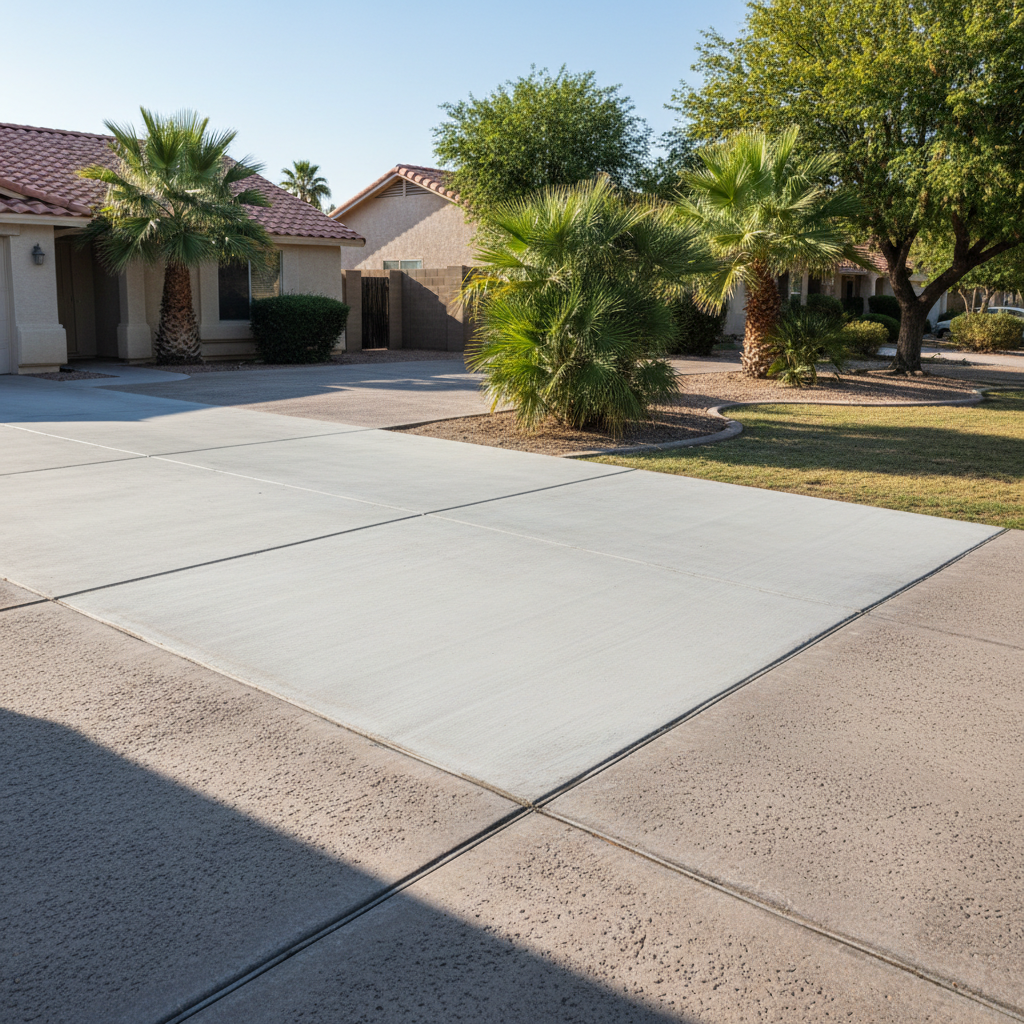
Alright, let's talk about concrete repair costs here in Glendale. Nobody likes unexpected expenses, but when your driveway's cracking or your patio's sinking, you gotta deal with it. The first thing most folks ask me is, "What's this gonna cost me?" And while I can't give you an exact number without seeing the job, I can definitely tell you what factors push the price up or down, and what you should expect.
What Makes Concrete Repair Cost More (or Less)?
It's not just a flat rate, you know. A bunch of things play into the final price tag. Here's what I'm looking at when I come out for an estimate:
- The Type of Damage: Is it just a few hairline cracks? Or is a whole slab heaved up because of expansive clay soils, which we see a lot of around here, especially in older neighborhoods? Simple crack filling is way cheaper than full slab replacement or extensive leveling.
- The Size of the Area: This one's a no-brainer. A small sidewalk patch is less than a whole driveway. We usually price by square foot for larger areas, or by linear foot for cracks.
- The Repair Method: Are we doing crack filling, grinding, patching, or mudjacking (also called concrete lifting or slab jacking)? Each method has different material and labor costs. Mudjacking, for instance, involves injecting a slurry under the slab to lift it, which is specialized work.
- Accessibility: Can we easily get our equipment to the damaged area? If we have to haul materials through a narrow gate or over landscaping, that adds time and labor.
- Surface Preparation & Finish: Does the area need extensive cleaning? Are you looking for a simple broom finish, or something more decorative like a stamped overlay after the repair? Fancy finishes cost more, naturally.
- Permits: For bigger jobs, especially if it involves public sidewalks or structural elements, you might need a city permit. That's an extra cost and can add time.
Typical Cost Ranges for Common Concrete Repairs
Okay, you want numbers. Here's what I've seen in Glendale for common repairs. Keep in mind these are averages, and your specific job could be higher or lower.
- Small Crack Filling (DIY vs. Pro): If you're tackling a few small, non-structural cracks yourself with a tube of caulk, you're looking at $10-$30 for materials. If you call us for professional crack repair on, say, a 10-foot crack, you might pay anywhere from $150 to $350, depending on the crack's width and depth. We use industrial-grade sealants that last.
- Patching/Resurfacing Small Areas: For a deteriorated section of a sidewalk or a small patio area (say, 20-50 sq ft) that needs patching or a thin resurfacing layer, you're probably looking at $300 to $800. This is for surface-level damage, not structural issues.
- Concrete Lifting (Mudjacking/Slabjacking): This is for sunken slabs – driveways, patios, pool decks. It's often much cheaper than replacing the whole slab. For a typical single-car driveway section that's sunk, you might pay $600 to $1,500. A larger patio or multiple sections could go up to $2,500 or more. It depends heavily on the void size and how much material we need to inject.
- Slab Replacement (Small Sections): If a section of your concrete is just too far gone, replacement is the only option. For a small 5x5 foot section of sidewalk, you could be looking at $400 to $800. This includes demolition, hauling away debris, new base material, and pouring new concrete.
These are ballpark figures, of course. For a precise quote, you really need someone like us from Glendale Concrete Group to come out and take a look.
What Should Be Included in Your Quote?
When you get a quote from any contractor, make sure it's detailed. It should clearly spell out:
- Scope of Work: Exactly what's being repaired, where, and how.
- Materials: What type of concrete, sealants, or lifting materials will be used.
- Labor Costs: Sometimes broken down, sometimes included in the total.
- Site Preparation: Any grinding, cleaning, or base work.
- Cleanup & Debris Removal: This is a big one. You don't want to be stuck with a pile of old concrete.
- Warranty: What kind of guarantee do they offer on their work?
How to Avoid Overpaying for Concrete Repair
Here's some free advice to save you some headaches and cash:
- Get Multiple Quotes: Don't just go with the first guy. Get at least three detailed estimates. This helps you compare apples to apples and understand the market rate.
- Check References & Reviews: A good contractor will have happy customers. Ask for references or check online reviews.
- Ask About Experience: Concrete work isn't rocket science, but experience matters. You want someone who's dealt with our Arizona heat and soil conditions before.
- Don't Always Go for the Cheapest: The lowest bid often means corners are being cut. You want quality work that lasts, not a repair you'll have to redo in a year.
- Understand the Contract: Read everything before you sign. Make sure you're clear on payment schedules, timelines, and what happens if there are unforeseen issues.
Dealing with damaged concrete is a pain, but getting it fixed right doesn't have to break the bank. Do your homework, ask the right questions, and you'll find a solid contractor who'll do a good job for a fair price. If you're in Glendale and need an estimate, give us a call at Glendale Concrete Group. We're always happy to help you figure out the best way to tackle your concrete problems.