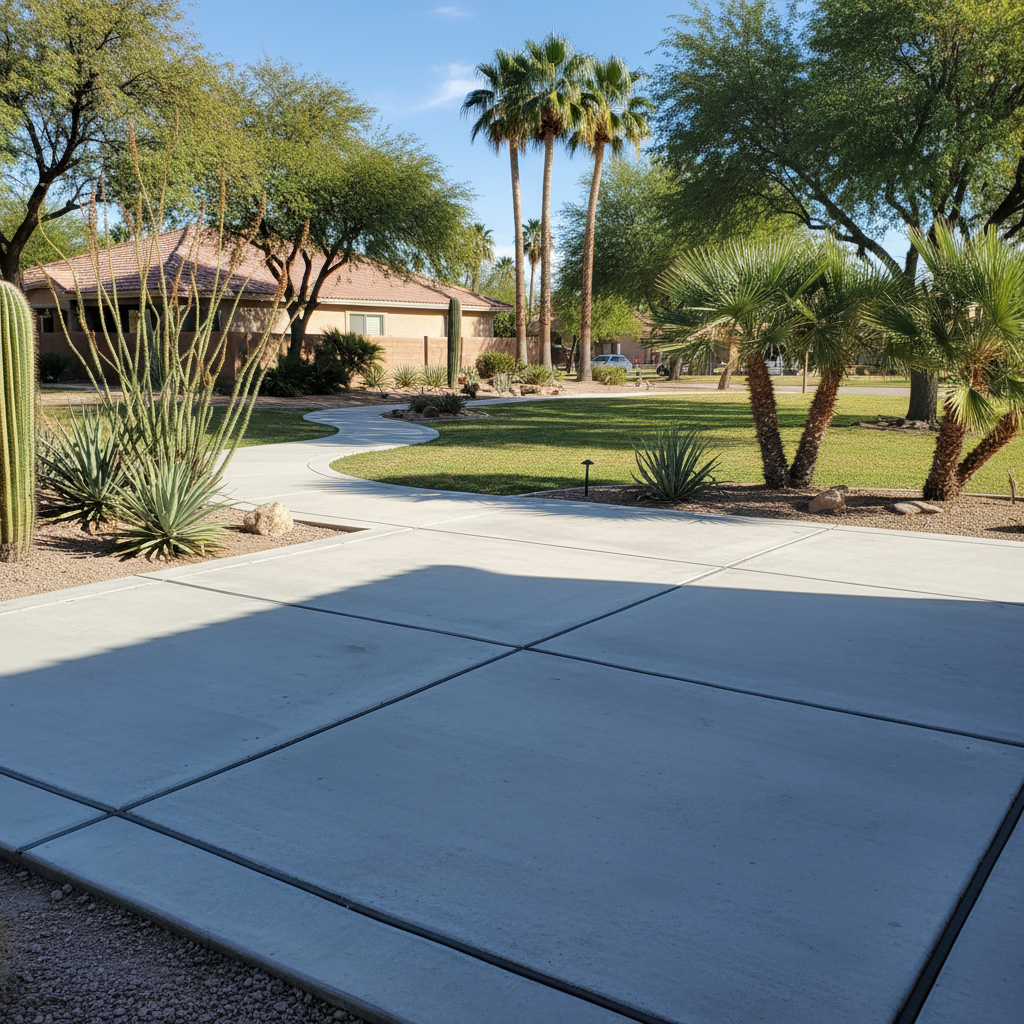
Alright, let's talk about your concrete. Whether it's a driveway, patio, or walkway, you probably shelled out good money for it. You want that investment to last, right? Especially with the kind of sun and heat we get here in Glendale, concrete takes a beating. It's not just about looking good, either; proper care means you won't be dealing with costly repairs down the road.
Extend Your Concrete's Lifespan in the Desert
So, how do you make sure your concrete sticks around for the long haul? A lot of it comes down to protecting it from the elements, which, for us, mostly means the sun and extreme temperature swings.
- Seal it up: This is probably the single most important thing you can do. Think of a good quality sealer as sunscreen for your concrete. It protects against UV rays, which can fade and degrade the surface over time. Plus, it helps repel water, oil, and other stains. Here in Glendale, with our intense summer sun, I recommend resealing every 2-3 years. Maybe even more often for high-traffic areas or if it's exposed to a lot of direct sun all day. Really, don't skimp on this.
- Clean regularly: Sounds simple, but it makes a real difference. Sweep off dirt, leaves, and debris. Use a garden hose to rinse it down. For tougher spots, a mild detergent and a stiff brush will do the trick. Just don't let oil or grease stains sit; they'll soak right into the concrete if left too long, especially if it's unsealed.
- Watch the heavy loads: I know, sometimes you've gotta move a heavy trailer or park a big RV. Just be mindful. Repeatedly parking heavy vehicles in the same spot, particularly near the edges of a driveway, can cause stress cracks over time.
- Mind the water: Good drainage is absolutely key. Make sure water isn't pooling on your concrete for extended periods. If you've got downspouts dumping right onto your patio or driveway, consider extending them or redirecting the flow. Water seeping under the slab can erode the sub-base, leading to settlement and cracks.
What Regular Maintenance Looks Like for Glendale Homeowners
Beyond sealing, your routine maintenance here isn't too complicated. It's more about being observant and proactive.
- Sweep and rinse: I mentioned this already, but it's your weekly or bi-weekly chore. Keeps the surface clear and reduces the chance of stains setting in.
- Spot clean stains: If you spill something – oil, paint, even a leaky sprinkler head leaving rust – tackle it right away. The longer it sits, the harder it is to remove. There are specific concrete cleaners for different types of stains; just make sure they're appropriate for sealed surfaces if you've got one.
- Check for cracks: Do a walk-around once a month or so. Look for new cracks, especially those tiny hairline ones. Catching them early means they're easier and cheaper to fix before they become a bigger problem.
- Pressure washing (carefully): You can pressure wash, but don't go crazy with the highest setting. Too much pressure can damage the surface, particularly if it's an older slab or if you're too close. Use a fan tip and keep it moving. If you're not comfortable, hire someone who knows what they're doing.
Warning Signs Your Concrete Needs Attention
Your concrete usually gives you hints when something's not right. Don't ignore these:
- New or widening cracks: Hairline cracks are common and often just cosmetic. But if you see cracks getting longer, wider, or if they're raising one side of the slab higher than the other, that's a red flag.
- Spalling or flaking: This is when the surface starts to peel or chip off. It often happens due to freeze-thaw cycles (not a huge issue here, thankfully) or chemical exposure. More often in our climate, it's a sign of a poor mix or improper finishing, or just general wear and tear from UV.
- Discoloration or fading: If your sealed concrete is looking dull or patchy, it's probably time to reseal. Unsealed concrete will naturally fade, but significant discoloration can indicate a problem with the mix or exposure.
- Sinking or uneven sections: This is a big one. If a slab is noticeably lower than its neighbors, or if you're tripping over an uneven joint, it means the ground underneath has shifted or eroded. This can be caused by plumbing leaks, poor drainage, or even expansive clay soils that swell and shrink with moisture changes, which we definitely have in parts of Glendale, like around the Thunderbird area.
- Pitting: Small holes or craters on the surface. Can be from aggregate popping out or from de-icing salts (again, not a big issue here, but can happen if someone uses the wrong product for cleaning).
When to Call a Professional
Look, I'm a big believer in DIY when it makes sense, but some things are best left to the pros. You should definitely call someone like us at Glendale Concrete Group if you see:
- Significant structural cracks: Anything wider than a quarter-inch, or if a crack runs all the way through a slab.
- Major settling or unevenness: If you've got a trip hazard or a large section of concrete has sunk, you'll need an expert to assess the cause and recommend a fix, whether it's mudjacking, slab jacking, or replacement.
- Widespread spalling or pitting: If large areas of your concrete are deteriorating, it might be beyond a simple patch job.
- Drainage issues causing concrete problems: If water is constantly undermining your concrete, a professional can help identify the source and suggest solutions that protect your investment long-term.
- You're just not sure: If you're looking at something and thinking, "Is this bad?" – then it's probably worth a quick call.