What's the difference between concrete and cement? Are they the same thing?
This is probably the most common question I get, and it's a good one because people use the terms interchangeably all the time. But no, they're not the same. Think of it this way: cement is an ingredient, like flour in a cake. Concrete is the finished product, the cake itself. Cement is a fine powder, usually gray, that gets mixed with water, sand, and gravel to create concrete. When you add water to cement, it creates a paste that binds the sand and gravel together. That's what hardens into the durable material we call concrete. So, you can't have concrete without cement, but cement isn't concrete on its own. Pretty simple, right?
How long does concrete flatwork actually last here in Arizona?
A properly installed concrete slab, whether it's a driveway, walkway, or even a foundation, should last a really long time here in Glendale. We're talking 20, 30, even 40 years or more. The key phrase there is 'properly installed.' That means good subgrade preparation – making sure the ground underneath is stable and compacted – the right mix design for our climate, and proper curing. Our intense Arizona sun and dry heat can be tough on concrete if it's not cured right. It'll dry out too fast and get weak. But if we do it right, you'll get decades of service out of it. We've seen plenty of driveways in older neighborhoods like Yucca District that are still holding up strong after 50 years.
Do I really need rebar or mesh in my concrete? What's the point?
Absolutely, you need rebar or mesh, or both, depending on the job. It's not just an upsell, it's crucial for the longevity and strength of your concrete. Concrete is incredibly strong under compression – meaning it can handle a lot of weight pushing down on it. But it's pretty weak when it comes to tension, like when it's being pulled apart or bent. That's where rebar (steel reinforcing bars) or wire mesh comes in. They provide that tensile strength. They hold the concrete together, especially when it cracks. And let's be real, concrete cracks. It's going to happen. The rebar or mesh doesn't prevent cracking entirely, but it keeps those cracks tight and stops them from spreading or separating, which keeps your slab structurally sound. For a driveway, you'll definitely want rebar, usually #3 or #4, spaced appropriately.
What's the best way to clean my concrete flatwork?
For most everyday grime, a good stiff broom and a hose with a strong nozzle will do the trick. If you've got tougher stains like oil, grease, or rust, you'll need something stronger. For oil and grease, a degreaser specifically designed for concrete works wonders. You spray it on, let it sit, scrub it, and then rinse it off. For rust, an oxalic acid-based cleaner can be effective. Just be careful with those and always follow the manufacturer's instructions, especially regarding safety gear. For really stubborn dirt or mildew, a pressure washer is your best friend. Just don't go too high with the PSI, especially on older or decorative concrete, or you could damage the surface. Start with a lower setting and work your way up. And always test any cleaner in an inconspicuous spot first.
Why do I see those lines cut into my concrete? Are they cracks?
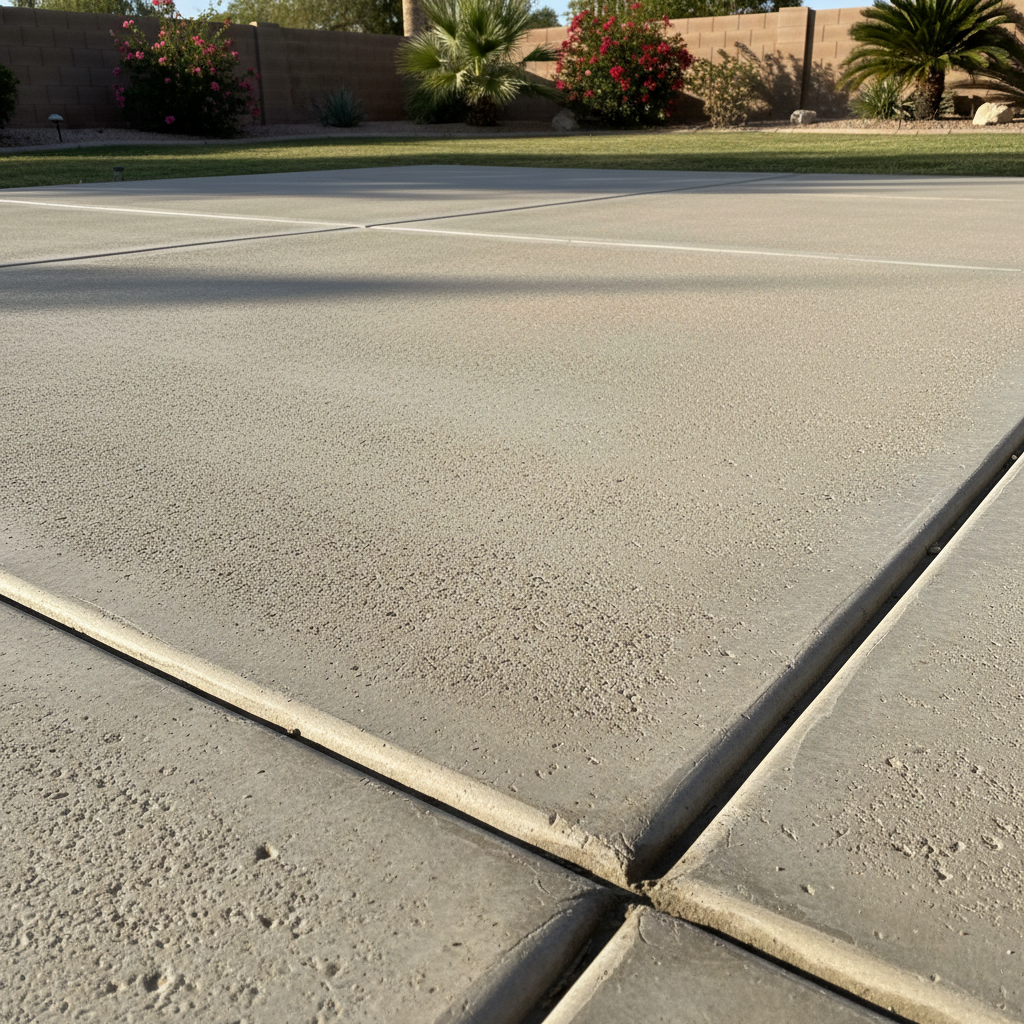
Those lines aren't cracks; they're called control joints, and we put them there on purpose. Remember how I said concrete cracks? Well, these joints are designed to control where those cracks happen. As concrete cures and as temperatures change, it expands and contracts. This movement creates stress, and that stress needs to be relieved. Without control joints, the concrete would crack randomly and often in unsightly, structurally compromising ways. By cutting these grooves, usually about a quarter of the slab's depth, we create weak points. The concrete is designed to crack along these lines, keeping the cracks straight, neat, and mostly out of sight. It's a planned crack, if you will. It's a sign of a professional installation, not a flaw.
How long do I really need to stay off new concrete?
This is super important, and it depends on what the concrete is for. For foot traffic, you can usually walk on it safely after 24 to 48 hours, especially in our warm Glendale weather. But for vehicle traffic, like a new driveway, you need to be much more patient. We typically recommend staying off it for at least 7 days, and ideally 28 days for it to reach its full design strength. I know it's tough to wait, especially when you want to use your new driveway, but going on it too soon can cause permanent damage, like tire marks, indentations, or even structural issues that'll shorten its lifespan. It's better to be safe than sorry and give it the time it needs to cure properly. We at Glendale Concrete Group always give clear instructions on this after a pour.
Can I pour new concrete over old, cracked concrete?
Short answer: usually no, and it's almost never a good idea for flatwork like driveways or patios. You might think it's a shortcut or a way to save money, but it almost always leads to bigger problems down the road. If the old concrete is cracked, spalled, or uneven, those issues will eventually show right through the new layer. It's called 'reflective cracking.' Plus, the new concrete won't bond properly to the old, creating a weak system that's prone to failure. You'll end up with two layers of bad concrete instead of one good one. The only time we'd ever consider pouring over existing concrete is for a very thin overlay on a perfectly sound, stable slab, and that's a specialized decorative application, not structural flatwork. For driveways, walkways, or anything structural, you're always better off removing the old and starting fresh. It's more work upfront, but it pays off in durability and, frankly, less headache.