You've got questions about your concrete, right? I hear 'em all the time when I'm out on jobs in Glendale, from Arrowhead Ranch to the older neighborhoods down near Grand Avenue. Folks want to know about their driveways, their sidewalks, that slab in the backyard. It's a big investment, and you want it done right and to last. So, let's cut to the chase and answer some of the most common things I get asked about concrete flatwork.
How long does concrete flatwork really last in Arizona?
This is probably the number one question people ask. Look, a properly installed concrete driveway or patio should last you a good 20 to 30 years, easy. Some folks get more, some get a little less. What makes the difference? A lot of things, actually. First, it's about the prep work. If you don't compact the sub-grade right, or if you skimp on the base, you're just asking for trouble down the line. Here in Glendale, we deal with expansive clay soils in some areas, which can shift a lot with our monsoon rains and then dry spells. You've gotta account for that, no doubt.
Then there's the concrete mix itself. You need the right strength (usually 3000-4000 PSI for residential flatwork) and proper air entrainment for freeze-thaw cycles — though that's less of a concern here than up north. And finally, the curing. That's huge. If you don't cure concrete slowly and correctly, it's going to be weaker and crack easier. We really take our time with curing at Glendale Concrete Group because it makes all the difference in how long your concrete lasts.
What causes concrete to crack, and can it be prevented?
Alright, let's be real: concrete cracks. It's not a matter of 'if,' but 'when' and 'how much.' Concrete shrinks as it dries, and that shrinkage creates stress. If that stress isn't relieved, it'll crack wherever it's weakest. The good news is, we can control where those cracks happen with control joints.
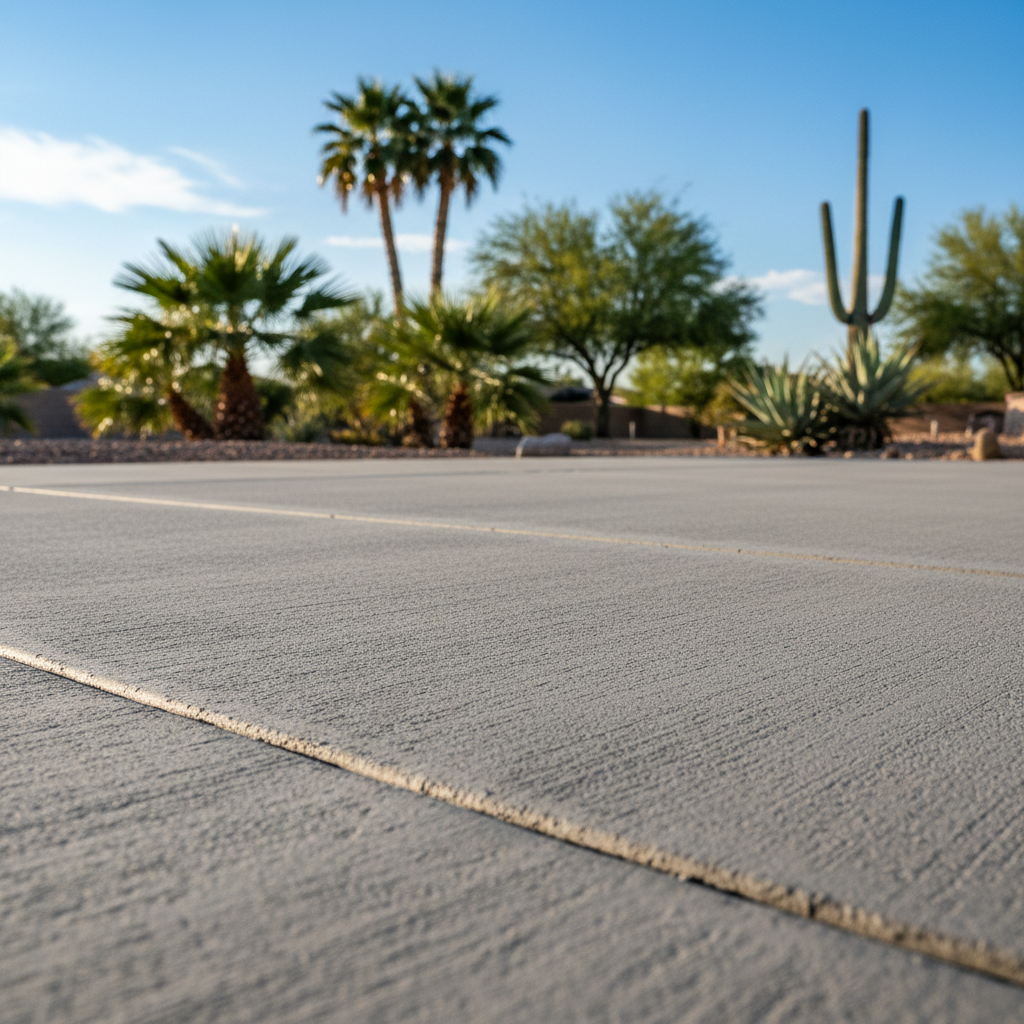
Control joints are those saw cuts or grooves you see in driveways and sidewalks. They're designed to create a weakened plane so the concrete cracks neatly along that line, rather than all over the place. We space these joints according to industry standards, usually every 10-12 feet for a 4-inch slab. Other things that cause cracking include poor sub-grade prep (uneven settling), overloading the slab (parking heavy RVs on a standard driveway), or tree roots. We can't stop nature, but good planning and proper installation go a long way in minimizing unsightly cracks.
Do I need rebar or mesh in my concrete flatwork?
Absolutely. For most residential flatwork, you're going to want either steel rebar or welded wire mesh. They don't prevent cracking entirely, but they do something super important: they hold the concrete together if and when it does crack. This is called 'structural integrity' or 'crack control.' Without it, a crack can widen and separate, leading to uneven surfaces and trip hazards. Think of it like this: the concrete provides the compressive strength (it resists being squished), and the steel provides the tensile strength (it resists being pulled apart). For driveways and patios, we typically use 1/2-inch rebar spaced 18-24 inches on center, or 6x6-10/10 welded wire mesh. Sometimes we use both, depending on the application and how much weight it's expected to hold.
How thick should my concrete driveway or patio be?
For most residential applications, a 4-inch thick slab is standard for patios, walkways, and even driveways that will only see light vehicle traffic (cars, small trucks). If you're planning on parking an RV, a large work truck, or anything heavier, you'll want to go with a 5-inch or even 6-inch slab. The extra thickness significantly increases the load-bearing capacity. It's a small extra cost upfront for a lot more durability down the road. We'll always discuss your specific needs and recommend the right thickness for your project.
What's the deal with sealing concrete? Is it really necessary?
Sealing your concrete isn't always 'necessary' in the sense that your concrete will fall apart without it, but it's definitely a good idea, especially here in Glendale. Our intense sun, the occasional oil drip from a car, and even things like spilled BBQ sauce can stain and degrade unsealed concrete over time. A good quality sealer acts like a protective shield. It repels water, oil, and other contaminants, making your concrete much easier to clean and protecting it from UV damage. It also helps reduce surface wear and tear. I usually recommend sealing new concrete about 28 days after it's poured (once it's fully cured) and then resealing every 2-5 years, depending on the type of sealer and how much traffic it gets. It's a simple maintenance step that really extends the life and look of your investment.
How do I clean and maintain my concrete flatwork?
Keeping your concrete looking good isn't rocket science, but a little effort goes a long way. For general cleaning, a good sweep and a hose-down with water is often enough. For tougher dirt or grime, a mild detergent (like dish soap) and a stiff brush works wonders. For oil stains, you can try a degreaser or a poultice made of absorbent material (like cat litter or sawdust) mixed with a solvent. Let it sit, then sweep it up. Pressure washing can be effective, but be careful not to use too high a pressure or hold the nozzle too close, especially on older or unsealed concrete, as you can damage the surface. Always start with the lowest effective pressure. And remember that sealing schedule I just talked about? Stick to it. That's your best defense against long-term headaches.
There you have it. These are the questions I get asked most often, and I hope these answers give you a clearer picture of what goes into good concrete flatwork. If you've got more specific questions about a project at your Glendale home, don't hesitate to give us a call at Glendale Concrete Group. We're always happy to talk concrete.