Do I really need a permit to replace my sidewalk?
Yep, you probably do. People often miss this one, but it's pretty important. If you're replacing a public sidewalk – you know, the one that runs along the street in front of your place – that's usually city property or an easement. The City of Glendale has specific rules for things like how wide it needs to be, how thick, and even what kind of concrete mix you should use. They just want to make sure it's safe for everyone and built to last, which makes sense. You really don't want to pour a whole new sidewalk only to have the city tell you to rip it out and do it again because you skipped the permit or didn't follow their specs. What a headache! It'll cost you twice, too. Always check with the City of Glendale's planning or public works department before you even think about digging.
Why do sidewalks crack so much here in Glendale?
It's a mix of things, honestly, but our soil and weather are big players. We've got expansive clay soils in a lot of Glendale, especially in some older spots like the Yucca District or near Thunderbird Road. These soils swell up when they get wet and then shrink when they dry out. That constant movement right under your sidewalk puts a ton of stress on the concrete. Then, if you add our crazy temperature swings – 115 degrees in summer, sometimes dipping into the 30s in winter – the concrete expands and contracts. Without proper control joints and a good sub-base, all that stress has to go somewhere, and it usually shows up as cracks. Oh, and tree roots? They're another huge problem; they'll lift and crack concrete like it's nothing at all.
How long should a concrete sidewalk last in Arizona?
A concrete sidewalk, if it's installed well by a reputable company like Glendale Concrete Group, should easily last you 20 to 30 years. Some even go longer! The key, though, is "well-installed." That means proper site preparation, good drainage, the right thickness for the traffic it'll see (even if it's just foot traffic), and control joints that are spaced and cut correctly. Using the right concrete mix for our climate is also super important, don't you think? If anyone cuts corners, or if you've got really aggressive tree roots, that lifespan can definitely shrink. But with good maintenance and quality work up front, you're looking at decades of service.
Can I just patch a cracked sidewalk, or do I need to replace the whole thing?
It really depends on the crack. If it's just a small, hairline crack, or a minor spall (that's when a little piece of the surface breaks off), sometimes you can patch it up with a concrete repair compound. That's mostly a cosmetic fix, though. And it might not stop the crack from getting worse if the real problem (like soil movement) isn't taken care of. If you've got wide cracks, or uneven sections where one slab has lifted or sunk, or even extensive spiderweb cracking, then patching just won't cut it. Those are tripping hazards, plain and simple, and the sidewalk's structural integrity is compromised. In those situations, you're much better off replacing the damaged sections or the whole sidewalk. It's safer, and it'll look a lot better in the long run.
What's the deal with those lines they cut in new sidewalks? Are they just for looks?
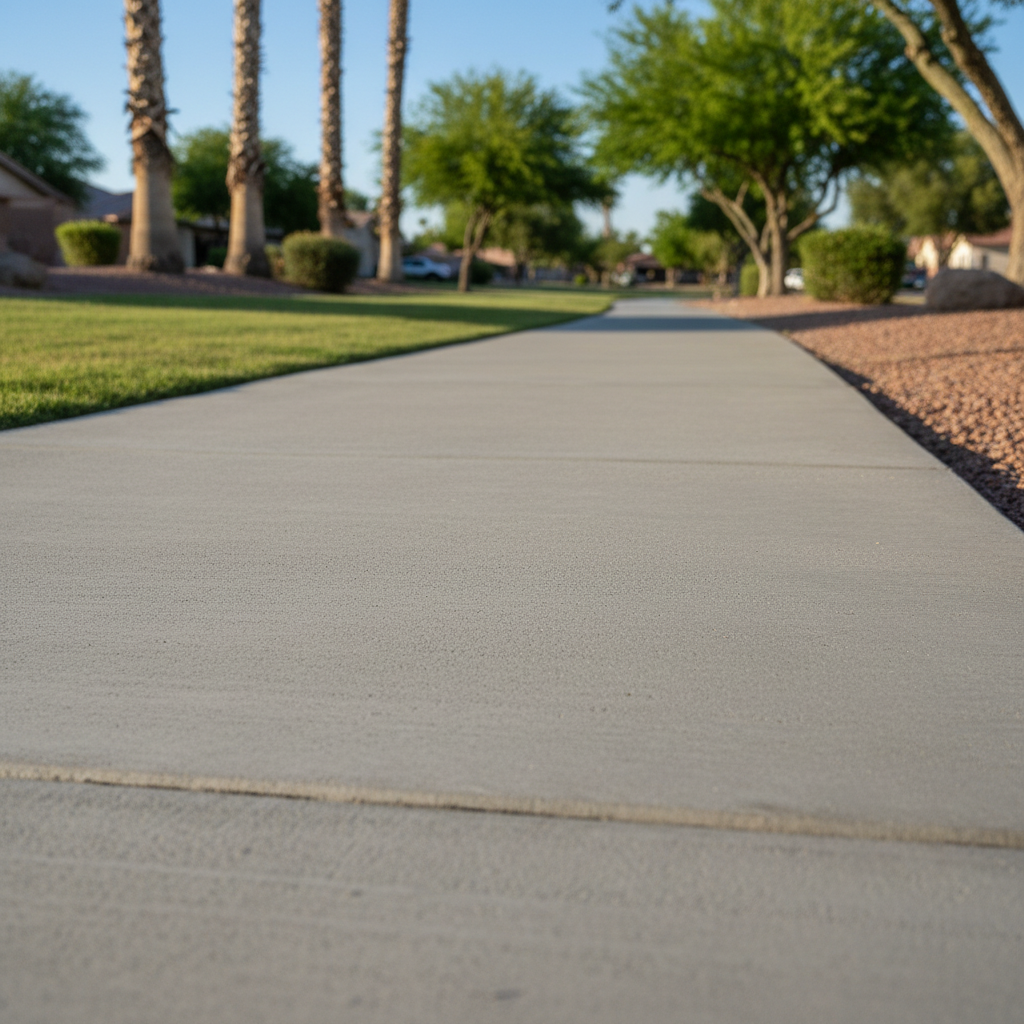
Those aren't just for looks, not at all. They're called control joints, and they are absolutely critical. Concrete is going to crack, that's just a fact of life. What these joints do is give the concrete a specific place to crack – in a straight, controlled line – instead of randomly all over the place. Think of it like scoring glass before you break it, you know? When the concrete expands and contracts with our crazy Glendale temperatures, or when the ground shifts a bit, those joints relieve the stress. Without them, you'd end up with jagged, ugly, and often dangerous cracks popping up everywhere. They need to be cut at just the right depth and spacing to actually work effectively.
How much does a new concrete sidewalk cost per linear foot?
That's a common question, and it's tough to give just one number because it varies so much. Generally, you're looking at anywhere from $8 to $18 per square foot for a standard 4-inch thick concrete sidewalk. To get a linear foot price, you'd multiply that by the width of your sidewalk. So, for a typical 3-foot wide sidewalk, that's roughly $24 to $54 per linear foot. But that's really just a rough estimate. Things that influence the price include: how much old concrete needs to be removed, the site preparation needed (like grading or compacting the sub-base), how accessible the area is for equipment, whether you need rebar or mesh, and any decorative stuff you might want. Always get a detailed quote from a few local contractors. Don't just go for the cheapest bid; make sure you're comparing apples to apples on the scope of work and materials.