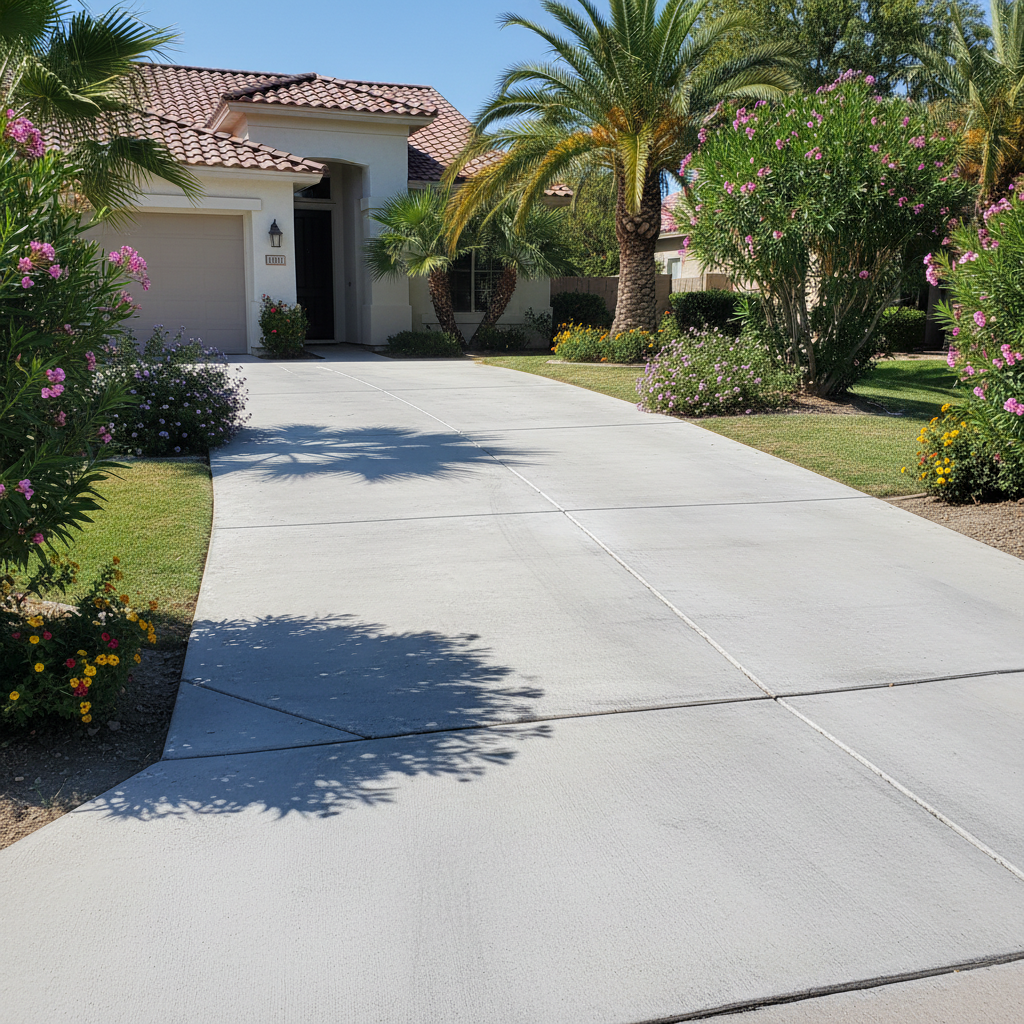
Think your concrete's indestructible? Well, it's tough, that's for sure. But even the best concrete, poured right here in Glendale, needs a little love to really last. We're talking about the kind of longevity that shrugs off our scorching summers and those monsoon downpours. As someone who's poured a lot of concrete around here, I can tell you: a little maintenance goes a long way.
Extend Your Concrete's Life in the Arizona Heat
You've invested in good concrete, whether it's a driveway, patio, or walkway. Now, let's make sure it stands the test of time. The biggest thing you can do, especially in our climate, is seal it. I really can't say this enough. A good quality sealer acts like sunscreen for your concrete. It protects against UV rays, which can break down the surface over time, and it helps repel water. Water, believe it or not, is concrete's biggest enemy. Even though we don't get much rain, when we do, it can seep into tiny cracks. Then, the intense heat causes expansion and contraction that makes those cracks bigger.
You should plan on reapplying sealer every couple of years, maybe three if it's a low-traffic area. For something like a driveway that gets direct sun all day, especially if you're in a neighborhood like Yucca District where homes are older and might have original concrete, you'll want to be on the shorter end of that spectrum. It's a simple job you can often do yourself with a roller or sprayer, or we can do it for you.
Another big one is drainage. Make sure water isn't pooling on your concrete. If you've got a spot where water sits after a rain, that's a problem waiting to happen. It'll weaken the surface and encourage algae growth, which is slippery and can stain. We always try to ensure proper grading when we pour, but sometimes landscaping changes or ground settling can affect it over time.
Regular Concrete Maintenance You Can Do
Okay, so sealing is the big one. What else? Honestly, it's pretty straightforward stuff:
- Keep it clean: Sweep off dirt, leaves, and debris regularly. Organic matter can hold moisture against the concrete and cause staining. For tougher stains, a pressure washer on a low setting can work wonders, but be careful not to blast too hard, especially on older or decorative concrete.
- Deal with spills immediately: Oil, grease, rust, even pet waste – these can all stain or etch your concrete if left too long. Blot up spills, then clean with a mild detergent and water. For oil, kitty litter or absorbent materials can help draw it out before cleaning.
- Watch for heavy loads: Try not to park super heavy vehicles or equipment on residential concrete that wasn't designed for it. Most driveways are built for cars and light trucks, not RVs or commercial vehicles.
- Trim back roots: If you have trees or large shrubs near your concrete, their roots can grow underneath and cause lifting or cracking. Keep an eye on that and trim roots if necessary, or consider a root barrier.
It's not rocket science, just consistent effort. Think of it like washing your car; it keeps it looking good and helps you spot issues early.
Warning Signs Your Concrete Needs Attention
You're out there, enjoying your patio, and you notice something. What should you be looking for? Here are some red flags:
- Cracks: Hairline cracks are pretty common and usually not a huge deal, especially if they don't spread. But if you see cracks wider than a credit card, or if they're growing quickly, or if they're uneven (one side higher than the other), that's a sign of a bigger issue.
- Spalling or flaking: This is when the top layer of concrete starts to peel or flake off. It can be caused by poor finishing, freeze-thaw cycles (not common here, but can happen with certain conditions), or chemical exposure. It leaves a rough, pitted surface.
- Pitting: Small holes or depressions in the surface. Often caused by aggregate popping out or by water freezing in tiny pockets (again, less common in Glendale, but possible).
- Uneven slabs: If one section of your concrete is sinking or lifting compared to an adjacent one, you've got a sub-base problem. This can be due to soil erosion, poor compaction, or tree roots. It's a tripping hazard and can lead to more cracking.
- Discoloration or staining that won't clean: Persistent dark spots or strange colors could mean moisture issues, chemical reactions, or even mold/mildew that's gotten deep into the pores.
Don't ignore these. A small problem caught early is usually a much cheaper fix than a big one that's been left to fester.
When to Call a Professional
So, you've spotted a problem. When do you call in the cavalry? You should definitely reach out to us at Glendale Concrete Group if you see:
- Significant cracking: If cracks are wide, deep, or running across large sections.
- Slab settlement or lifting: If sections of your concrete are uneven and create trip hazards. This often needs a professional to check the sub-base.
- Extensive spalling or pitting: If large areas of your concrete surface are falling apart.
- Drainage issues: If water is consistently pooling and you can't figure out why or how to fix it.
- You're unsure: Honestly, if you're worried about something you're seeing, just give us a call. It's better to get a professional opinion than to let a small issue turn into a major headache.
We can assess the situation, tell you what's going on, and give you honest options for repair or replacement. Sometimes it's a simple patch, other times it might need a full section replaced. We'll always give you the straight scoop. Your concrete is a big part of your home's curb appeal and functionality, so let's keep it in top shape.