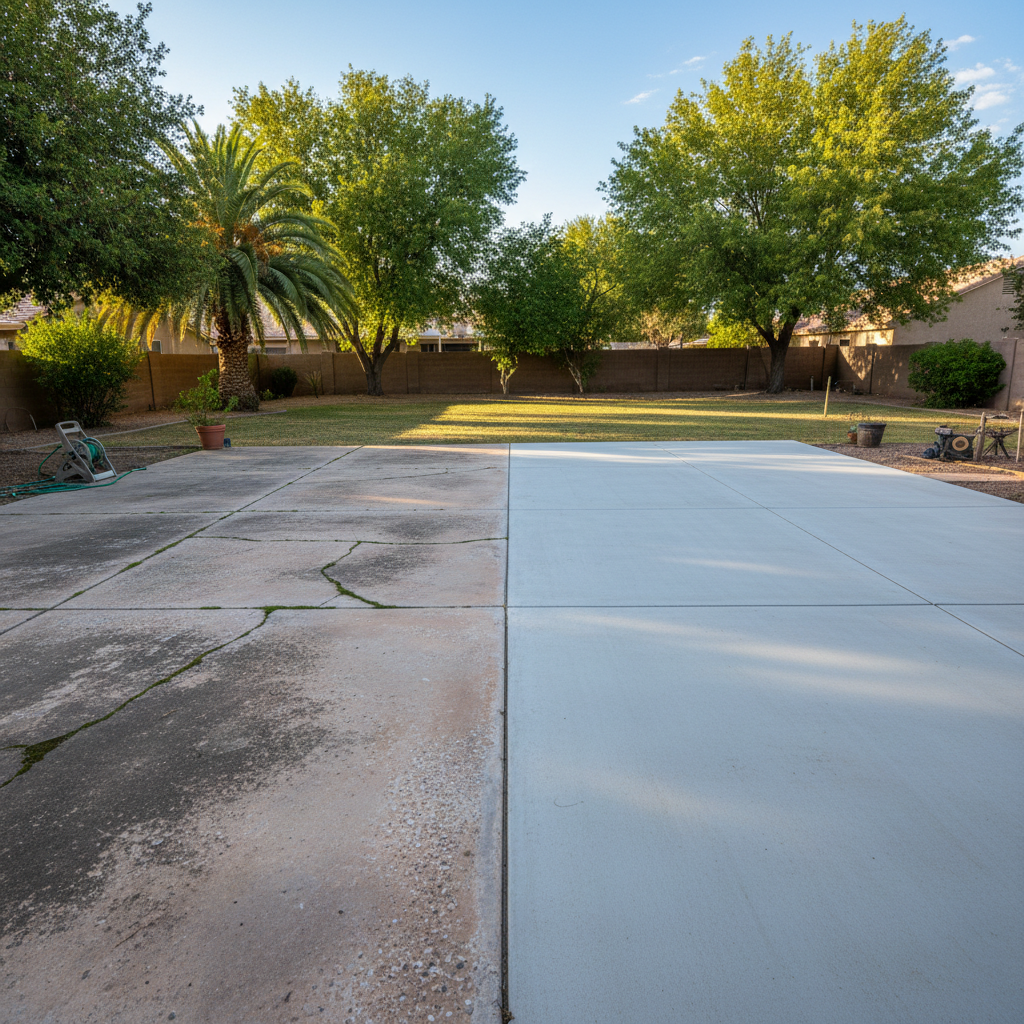
Deciding what to put down on your backyard patio, walkway, or driveway usually comes down to a choice between two heavy hitters: poured concrete slabs and interlocking concrete pavers. If you live anywhere around Glendale, our desert environment is not gentle on outdoor surfaces. Between triple-digit summer heat that bakes the ground and winter temperature swings, materials take a beating.
Here is what Glendale Concrete Group has seen working on local properties day in and day out, breaking down how these two options actually stack up against each other.
Upfront Cost and Installation
Money is usually where the conversation starts. Poured concrete is generally less expensive on day one. You are paying for materials, a quick excavation, and a crew to pour and finish the slab. Pavers require significantly more labor. Every single piece has to be hand-laid over a compacted base of aggregate and bedding sand, squared off, and locked in with edge restraints.
If you are on a strict budget for a large backyard space, a standard or lightly finished concrete surface from a team like Glendale Concrete Group will keep your initial costs down. Pavers will cost you more upfront, sometimes substantially more depending on the pattern and style you pick.
Durability and How They Handle Glendale Soil
Here is where our local conditions really force a choice. Glendale yards often sit on expansive native soils or caliche layers that shift, settle, and expand when moisture hits them, especially during sudden monsoon downpours.
- Poured concrete acts as a single, rigid sheet. When the ground moves underneath it, concrete cracks. We use control joints to tell the slab where to crack, but in the desert, cracking is a matter of when, not if.
- Pavers are modular. Because they are individual units separated by sand-filled joints, they naturally flex when the ground shifts. They will not crack in half; they just move slightly with the earth.
Maintenance and Real-World Repairs
Maintenance is where the two materials trade blows. A plain or stamped concrete slab is easy to keep clean, and you can just sweep it or hose it off. But if your concrete suffers a major structural crack or stains deep from oil or fertilizer, fixing it neatly is tough. Patching looks like patching, and fixing it usually means cutting out and replacing a whole section.
Pavers require different chores. You will deal with weeds popping up in the joint sand over time, and you may need to re-sand and seal them every few years. However, if a tree root pushes up a section of pavers or a utility trench has to be dug underneath, you can simply lift the pavers, fix the base, and lay the exact same stones back down. No scars, no mismatched patches.
Surface Heat in the Desert Sun
If you are walking barefoot across your patio in July, both materials are going to get hot. Dark gray concrete or dark charcoal pavers will burn your feet in the afternoon sun. If you choose concrete, going with a lighter, reflective color or an acrylic lace finish keeps the surface significantly cooler. With pavers, lighter stone selections perform similarly, though any stone exposed to direct desert glare will hold heat.
The Verdict for Glendale Properties
If you want a clean, continuous surface with lower initial costs, poured concrete is hard to beat. For driveways or large functional areas where a tight budget matters most, a professionally poured slab installed on a properly compacted sub-base is the way to go.
If your yard has active soil movement, or if you want a custom Mediterranean or Southwestern look that handles shifting ground without unsightly cracks, invest in pavers. Match your choice to your long-term plans for the property, and Glendale Concrete Group knows you will be satisfied with the results.